
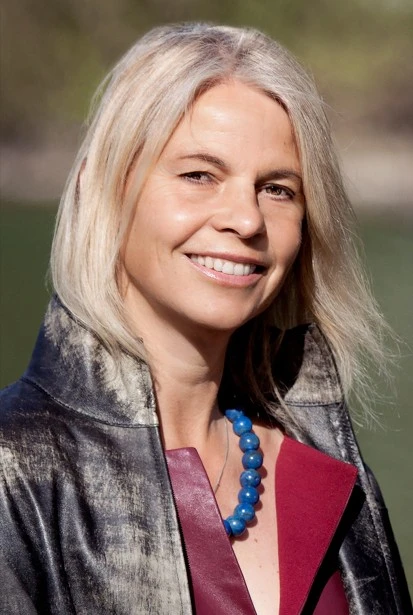
Karen Wendt
Investment and Finance Expert, Founder, Editor & Author at Responsible Investment banking
Innovation rarely emerges from comfortable silos. It happens at the boundaries where finance collides with technology, science, entrepreneurship, and social change. Yet much of global finance still operates within structures designed for a different era.
Karen Wendt has spent her career working precisely where those worlds intersect.
A Managing Director, C-suite executive, investment banker, entrepreneur, editor, author, and one of the early pioneers of sustainable finance, she has consistently questioned the assumptions that define traditional financial markets. Her work is driven by a simple but transformative conviction: access to capital is access to opportunity. Money is not merely a financial instrument—it is one of society’s most powerful tools for shaping the future.
Rather than simply optimizing existing financial systems, Karen has focused on redesigning them. Her career spans investment banking, sustainable finance, fintech, venture investing, and academia, giving her a rare vantage point across disciplines that are increasingly converging. While many professionals specialize in one domain, Karen has built her influence by connecting them.
Her journey reflects that philosophy. From traditional investment banking to pioneering responsible finance, from founding companies and raising capital to launching the Sustainable Finance Science Series with Springer Nature, she has consistently chosen to work where new ideas challenge established thinking. Because the next generation of finance will not be created by repeating yesterday’s models—it will emerge where expertise, innovation, and purpose intersect.
That same mindset shapes the communities she has built. Through SwissFinTechLadies and the Swiss Female Angels Club, Karen is helping create investment ecosystems that broaden participation, unlock overlooked talent, and connect founders with investors who are willing to think beyond conventional patterns. Her vision is clear: the future of finance will belong to those who build more inclusive networks, embrace collaboration across disciplines, and expand access to capital instead of concentrating it.
For this edition of Top 100 Disruptors, Karen Wendt shares the experiences, ideas, and leadership principles that have defined her career and explains why the greatest disruption in finance may not come from the next technology alone, but from reimagining who gets to build the future.
Your career spans investment banking, sustainable finance, fintech, venture investing, and academia. How did these experiences shape your leadership journey and vision for the future of finance?
What shaped my vision was not what I learned inside financial institutions, but what I discovered at their edges. Throughout my career, I saw a clear contradiction. There is no shortage of capital around the world, yet many innovative founders and important social challenges continue to struggle for funding.
That realization encouraged me to focus on ecosystem-building instead of simply allocating capital. Through SwissFinTechLadies and the Swiss Female Angels Club, we are doing more than investing in businesses. We are creating a new generation of investors. I believe the future of finance will be defined by who has access to capital rather than who controls it. To achieve that, finance must become more inclusive, data-driven, technology-enabled, and focused on meaningful impact.
What has motivated you to keep challenging traditional systems, and which values guide your leadership today?
My motivation has always been to challenge systems that limit opportunity. I believe finance should help society by supporting innovation, entrepreneurship, and sustainable growth.
The values that guide me every day are curiosity, collaboration, inclusion, and long-term thinking. These principles influence every initiative we build because expanding access to capital creates stronger economies and more innovative communities.
When evaluating fintech innovations, what qualities tell you a company has the potential to create lasting impact?
I always begin with three questions. First, does the technology solve a real economic problem, or does it simply offer a better-looking interface? Second, does it improve access, efficiency, transparency, or trust on a larger scale? Finally, can it continue creating value after the excitement around new technology fades?
Some fintech ideas are technically impressive but have little long-term economic value. The strongest companies improve how capital, information, and opportunity move through the financial system. I am especially interested in solutions that expand financial inclusion, democratize investing, improve sustainable capital allocation, and reduce barriers in cross-border finance.
How are fintech and emerging technologies helping create more collaborative and sustainable financial ecosystems?
For many years, sustainable finance faced a major challenge because reliable data was difficult to measure. Fintech has changed that dramatically.
Today, artificial intelligence, data analytics, and digital reporting tools allow us to measure environmental and social performance in ways that were impossible only a decade ago. Technology is also making investing more accessible. What was once available mainly to a privileged few is now becoming an opportunity for a much broader population.
The greatest breakthrough is not the technology itself. It is the ability to connect capital with measurable and transparent outcomes.
Which technologies and leadership qualities will define the organizations leading the future of global finance?
Artificial intelligence will have the greatest impact because it changes how financial decisions are made. Finance has traditionally relied on information gaps, and AI significantly reduces those gaps.
I also believe tokenization will reshape capital markets by making ownership, assets, and investment opportunities programmable, fractional, and globally accessible. Rather than debating AI versus blockchain, we should recognize that AI makes finance smarter while blockchain makes finance more transferable. Together, they create entirely new financial structures.
Leaders who succeed in this environment will stay curious, continue learning, adapt quickly, and combine innovative thinking with disciplined execution.
How have mentorship and lifelong learning influenced your career, and how are you encouraging the next generation of leaders?
Mentorship and continuous learning have played a central role throughout my career, and they remain essential to how I support others today.
Through SwissFinTechLadies and the Swiss Female Angels Club, we are helping more women become founders, venture capitalists, angel investors, and innovation leaders. Progress is encouraging, with more women entering these fields than ever before.
However, the funding gap remains significant. The challenge is not a shortage of talented women. It is the limited influence women have over capital allocation. That is why we created the Swiss Female Angels Club, giving women the opportunity to become investors, syndicate leaders, and decision-makers. The next important step is moving beyond representation toward ownership.
What separates fintech companies that achieve sustainable growth from those that struggle?
The most successful fintech companies understand that technology is not their real business model. Trust is.
Strong companies solve meaningful problems, establish credibility early, and build clear paths to sustainable revenue. Weaker businesses often mistake fundraising for validation and rapid growth for lasting success.
Capital can accelerate progress, but it cannot replace genuine product-market fit.
Your work spans academia, investing, entrepreneurship, and policymaking. How has that shaped your leadership style?
Working across these different fields has strengthened my belief that innovation succeeds when diverse perspectives come together.
Innovation without regulation creates instability, while regulation without innovation creates stagnation. Researchers generate knowledge, policymakers create the framework, and entrepreneurs develop practical solutions. The strongest ecosystems successfully connect all three.
This is why I remain active in research alongside investing and ecosystem-building. Great companies are important, but great ecosystems create lasting innovation because they bring together entrepreneurs, investors, researchers, businesses, and policymakers. Today, networks have become essential economic infrastructure.
What leadership advice would you give to emerging leaders who want to create meaningful change?
One of the biggest mistakes organizations make is treating transformation as a technology project. In reality, it is a leadership project.
Technology alone cannot deliver meaningful change without the right culture, incentives, and talent development. Innovation should not exist in one department. It should become part of the organization’s identity.
My advice is simple. Do not focus only on building the next unicorn. Focus on solving meaningful problems that improve people’s financial outcomes. Challenge outdated systems, but build practical solutions that people genuinely need. Most importantly, remember that access to capital shapes the future. If you want lasting impact, build ecosystems that allow others to succeed alongside you.
Looking ahead, what developments excite you most about the future of fintech and investing over the next five years?
Several trends stand out to me. AI-powered financial decision-making, tokenization of real-world assets, broader access to private market investing, sustainable finance becoming mainstream, and the continued growth of investor communities will all reshape the industry.
I also believe the future belongs to integrated financial ecosystems rather than isolated fintech products. The companies that succeed will be those that create connected platforms capable of bringing together investors, founders, institutions, and technology into one collaborative environment.
Closing Thoughts
Karen Wendt’s work demonstrates that the future of finance is about far more than technology or capital. It is about expanding opportunity, strengthening collaboration, and creating systems that allow innovation to reach more people. By combining expertise across investing, academia, entrepreneurship, and sustainable finance, she continues to challenge long-standing barriers while helping shape more inclusive financial ecosystems. As finance enters a new era driven by artificial intelligence, digital innovation, and broader participation, Karen’s vision serves as a reminder that lasting transformation begins by opening doors for others to build, invest, and succeed together.