
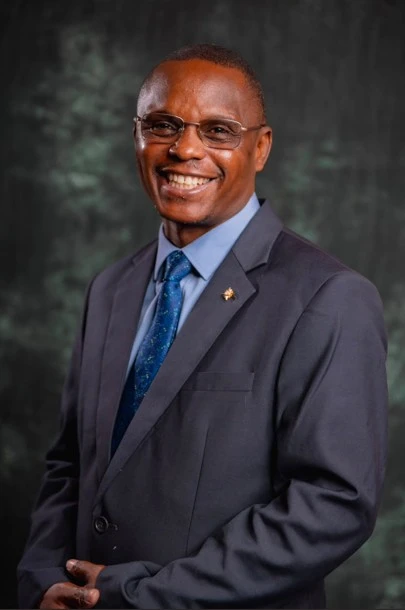
Nixjoen Mapesa
Managing Director of Premier Service Medical Investments (Private) Limited
Introduction
Some leaders improve organizations. Others rebuild them from the ground up. Dr. Nixjoen Mapesa belongs to the second group. As the Managing Director of Premier Service Medical Investments (Private) Limited, he has dedicated his career to strengthening healthcare systems by combining medical knowledge with business leadership. His journey began as a practicing doctor, but he soon realized that the biggest challenges affecting patient care often started far beyond the hospital ward. Financial decisions, governance, and operational management played an equally important role in determining healthcare outcomes.
Driven by this understanding, Dr. Mapesa expanded his expertise through advanced business studies and moved into executive leadership. Today, he leads one of Zimbabwe’s integrated healthcare groups while also sharing his insights as the author of the Organisational Survivor Series. His work reflects a clear belief that lasting change comes from building institutions that are strong, accountable, and prepared for the future. In this conversation, he shares the experiences, values, and lessons that continue to shape his leadership journey.
Q1. Your career has taken you from medicine to executive leadership. What inspired that journey?
I started my career as a medical doctor, working directly with patients. Over time, I realized that many of the factors influencing patient care were not clinical at all. They were decisions about finance, operations, governance, and leadership. That inspired me to learn the business side of healthcare.
I completed several business qualifications alongside my medical background and gradually moved into leadership roles. Today, as Managing Director of Premier Service Medical Investments, I oversee hospitals, diagnostic services, pharmacies, nursing services, and healthcare technology. Although my role has changed, I still see myself as serving patients. The difference is that I now do it by building stronger healthcare systems.
Q2. What continues to motivate you, and which values guide your leadership?
My greatest motivation is the belief that people deserve healthcare institutions they can trust. Communities need hospitals that remain open, healthcare providers that are supported, and organizations that are well managed.
At PSMI, our culture is built around Integrity, Care, Excellence, Accountability, Respect, and Service. Personally, I value honesty, discipline, and stewardship. I begin every morning with a routine I call the Sphere of Silence, where I spend time reflecting, planning, and learning before the day begins. It helps me make thoughtful decisions instead of reacting to situations.
Q3. Can you share one of the toughest challenges in your leadership journey and how you overcame it?
One of the most challenging periods of my career was leading Zimbabwe’s largest medical aid society during a time when there was no substantive board in place. It meant carrying full executive responsibility in a very difficult economic environment while facing constant public attention.
I stayed focused on three things. First, I documented every important decision carefully. Second, I concentrated on delivering results instead of responding to criticism. Third, I turned those difficult experiences into learning opportunities. Eventually, they became the foundation for my Organisational Survivor Series, which I wrote to help other leaders facing similar challenges.
Q4. How do you encourage innovation and collaboration across your organization?
Innovation and collaboration do not happen by chance. They need systems that support them. At PSMI, we brought together divisions that had previously worked separately by creating shared goals, regular reporting, and stronger communication.
We also encourage people to speak honestly about problems because real innovation begins when people feel safe to raise concerns. At the same time, every leader has clear responsibilities and measurable targets. Accountability encourages creative thinking because everyone understands the impact of their work on the organization’s success.
Q5. What qualities separate outstanding leaders from average ones?
I believe the best leaders share several habits. They take time to think before acting instead of making rushed decisions. They are willing to face uncomfortable truths rather than avoiding difficult conversations.
Strong leaders also build systems instead of depending on individual effort. An organization should continue to perform well even when its leader is not present. Finally, they remain consistent. Success is not created by one great decision but by making disciplined decisions over many years.
Q6. How have learning and mentorship influenced your growth, and how do you develop future leaders?
Learning has been central to my entire career. Every qualification I pursued helped me grow, and I still dedicate time every day to reading and developing my knowledge. Writing books has also challenged me to think more deeply about leadership.
Within PSMI, leadership development is a priority. I invest in my senior team by giving them opportunities to participate in board-level discussions, take on greater responsibility, and prepare for future leadership roles. Beyond the organization, I also teach governance and share leadership lessons through my writing because I believe true leadership creates more leaders.
Q7. Healthcare is changing rapidly. How do you keep your organization ready for the future?
We rely on three important practices. First, we actively listen to our patients through structured customer feedback that is reviewed by our executive team. Second, we closely monitor changes across the healthcare industry so we can respond quickly when needed.
Finally, we treat strategy as an ongoing process rather than a document that sits on a shelf. Every employee understands our long-term goals, and we regularly review our progress. That keeps the organization flexible and prepared for change.
Q8. Looking back, what experience has had the biggest influence on your leadership style?
The turnaround of PSMI in 2024 shaped my leadership more than anything else. We faced difficult decisions, including whether to pursue corporate rescue, liquidation, or a complete turnaround. Together with our shareholders, we chose the most challenging path.
What I learned was that people will make extraordinary sacrifices when they believe in a clear and honest plan. Our employees accepted difficult changes because they understood the purpose behind them. Since then, my leadership has focused on telling people the truth while providing a realistic path forward.
Q9. What advice would you give to emerging leaders who want to create lasting impact?
Learn every part of your industry instead of focusing only on your own role. Build your reputation through consistent, responsible decisions before difficult moments arrive.
Most importantly, see challenges as opportunities to learn rather than obstacles. Every difficult experience can become valuable if you take time to understand it. Finally, focus on building institutions instead of personal recognition. A lasting legacy is created when the organization continues to succeed long after the leader has stepped away.
Closing
Dr. Nixjoen Mapesa’s leadership journey demonstrates that meaningful disruption is not about creating attention but about creating lasting value. By combining medical expertise with business leadership, he has helped strengthen healthcare organizations while inspiring others to think differently about governance, accountability, and long-term impact. Through his work at Premier Service Medical Investments (Private) Limited and his Organisational Survivor Series, he continues to encourage leaders to build institutions that endure, empower people, and improve lives. His story is a reminder that true leadership is measured not by personal success, but by the strength of the systems and opportunities left behind for future generations.