
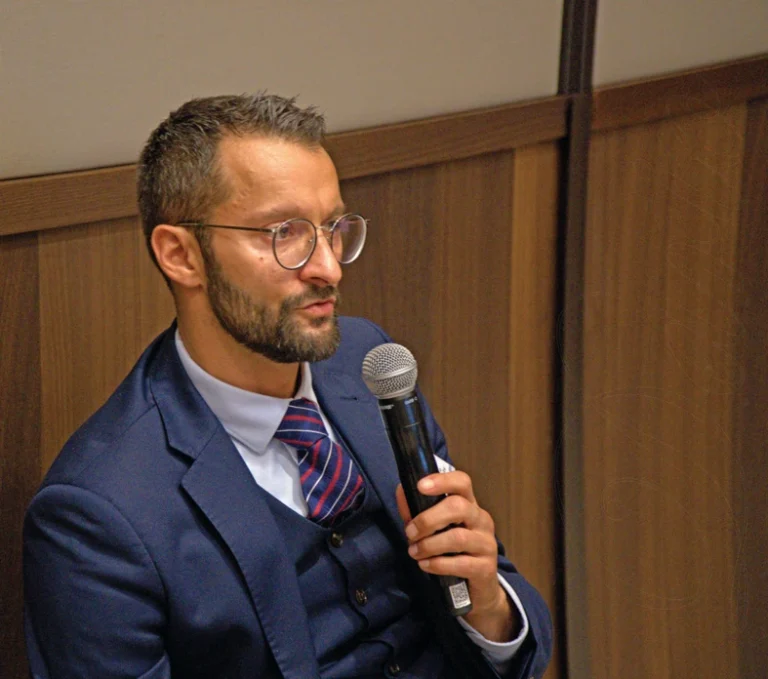
Dario Kulic
Global Process Owner (GPO) at Source to Pay (S2P)
Dario Kulić: Architecting Human-Centered Procurement Transformation
In today’s complex business environment, procurement has evolved far beyond its traditional role. It now sits at the intersection of strategy, technology, risk management, and value creation. Few leaders understand this transformation as deeply as Dario Kulić, an enterprise transformation architect in Procurement and Source-to-Pay (S2P). With more than 18 years of experience across strategic sourcing, procurement operations, and finance-adjacent processes, Kulić has built a reputation for designing systems that connect strategy with day-to-day execution.
Throughout his career, he has worked in complex and regulated environments where procurement decisions influence cash flow, supplier relationships, compliance, and long-term business performance. Rather than focusing only on strategy, Kulić concentrates on the operating models that make strategies work in practice. His leadership approach centers on clarity, accountability, and human-centered change—helping organizations move from fragmented processes to well-connected ecosystems that deliver measurable results.
In this conversation, he reflects on his journey, leadership philosophy, and the lessons he has learned while transforming procurement operations around the world. At the center of his work today is a growing advisory framework that includes the Kulic Transformation System, Kulic Authority Wheel, Change Agent Compass, Change Agent Code, Kulic Transformation Architecture, and the Kulic Intellectual Map. These models form the foundation of his structured methodology for guiding organizations through complex transformation with clarity and measurable outcomes.
Q1. Let’s start with your journey. How did it begin, and what led you to your current leadership role?
My journey started inside the process itself. Early in my career, I worked closely with procurement operations and quickly realized that procurement is not just a department—it is a network of decisions that touches cash, risk, compliance, innovation, and customer value.
Over the past 18 years, I have worked across strategic sourcing, P2P and S2P processes, accounts payable, and category management. What pushed me toward leadership was a pattern I kept seeing: many organizations had strong strategies, but they struggled in execution because the operating model was not built to support those strategies.
That realization shaped the way I work today. My focus is on building high-performing procurement ecosystems where governance, processes, technology, and people are connected end to end. This philosophy later evolved into the Kulic Transformation System, which helps organizations structure and execute transformation with measurable results.
Q2. What motivates you to keep pushing forward, and what values guide your leadership?
Two things keep me moving forward. The first is impact. I’m motivated by solving organizational issues that quietly slow companies down—manual work, unclear ownership, or fragmented service models.
The second is integrity. I believe leadership should be built on honesty and transparency.
The values that guide my leadership are simple: clarity over complexity, facts over opinions, ownership over excuses, and human-centered change rather than forced compliance. These principles are also reflected in the frameworks I use today, particularly the Change Agent Code and the Change Agent Compass, which help leaders navigate transformation while keeping teams aligned and engaged.
Q3. Every journey has challenges. Was there a defining moment in your career that shaped your approach?
One defining moment came during a transformation initiative involving several departments. Everyone appeared busy and the project looked active, but progress was only cosmetic. Small adjustments were being made while the underlying system remained unchanged.
Instead of continuing with surface improvements, I decided to examine the real workflow. We mapped the operational flow exactly as it happened, identifying handoffs, rework loops, and delays. Once the process reality became visible, we clarified decision ownership and governance. That shift changed the conversation completely.
This experience later influenced the development of the Kulic Authority Wheel—a governance model designed to make accountability and decision rights visible in complex organizations.
Q4. Innovation and collaboration are essential today. How do you encourage them within teams?
For me, innovation is not simply about generating ideas—it’s about removing friction so that ideas can work in real operations. I focus on three elements.
First, psychological safety combined with operational discipline. Teams should feel comfortable challenging assumptions, but decisions must still be grounded in data and process facts.
Second, a shared organizational language. The Kulic Intellectual Map helps teams understand how processes, roles, and decision points connect across the enterprise.
Third, rapid feedback loops. Instead of long discussions, I encourage pilot initiatives that allow teams to test ideas quickly and learn from real results.
Q5. What traits distinguish top-performing leaders?
Top-performing leaders consistently demonstrate a few habits. They make decisions even when information is incomplete, while building systems that improve information quality over time. They recognize that activity does not always equal progress. They invest in operating models, not just strategy.
Most importantly, they translate vision into clear roles, metrics, governance structures, and routines. This design philosophy is exactly what the Kulic Transformation Architecture was created to support.
Q6. How have mentorship and continuous learning influenced your growth?
Mentorship played a major role in my development. The most valuable mentors encouraged me to think beyond my immediate function and understand the broader connections between finance, operations, risk, and leadership. They didn’t simply give answers; they asked better questions.
Today, I try to create the same environment within teams. Learning should always be connected to real work. Capability development is far more powerful when it happens within active transformation initiatives rather than isolated training sessions.
Q7. Markets change quickly. How do you keep organizations aligned and agile?
True agility requires structure. Without structure, agility becomes chaos. I focus on separating what must be standardized from what should remain flexible.
Governance frameworks, process ownership, and data definitions should be standardized across the organization—these form the backbone of a reliable operating system. At the same time, flexibility should exist where it creates value, such as category strategies, supplier-collaboration models, or regional execution approaches.
Within the Kulic Transformation System, this balance allows organizations to adapt quickly while maintaining operational stability.
Q8. What key lesson has shaped your leadership style?
One lesson stands out: good people can deliver poor results when they operate within poorly designed systems.
This insight made me focus strongly on organizational architecture. Roles, incentives, interfaces, and decision rights shape behavior. My leadership style today is direct but respectful—I challenge systems and structures, not individuals.
At the same time, I recognize that change affects people emotionally, and sustainable transformation requires both clarity and empathy.
Q9. What advice would you give emerging leaders who want to make a real impact?
My advice is simple. Don’t chase influence or titles—focus on competence and results. Learn the full process, not only your specific function. Make value measurable through clear metrics. Communicate with courage.
If you see an organizational issue, describe it clearly, propose a solution, and take ownership of the outcome. Credibility grows when leaders consistently deliver practical improvements.
Closing Perspective
Dario Kulić’s approach to leadership reflects a practical understanding of how organizations operate. Rather than focusing only on strategy, he concentrates on the structures that allow strategy to succeed. His work demonstrates that procurement can evolve into a powerful value platform when governance, technology, and human behavior are aligned.
Through the development of the Kulic Transformation System and its supporting models—including the Kulic Authority Wheel, Change Agent Compass, Change Agent Code, Kulic Transformation Architecture, and the Kulic Intellectual Map—Kulić has created a structured pathway for organizations navigating complex transformation. As businesses face increasing complexity and operational pressure, his philosophy remains clear: sustainable progress is achieved when systems are designed thoughtfully, execution is disciplined, and people remain at the center of change.
Connect
Dario Kulic
Contact Information
Kulic Advisory & Consulting
Founder & Chief Executive Officer: Dario Kulic
Tagline: Simple. Straightforward. Sustainable. Human-centered efficiency.
LinkedIn: Dario Kulić | LinkedIn
Website: www.KulicAdvisory.com
Email: Dario@Kulicadvisory.com
Phone: +49-157-85234224