
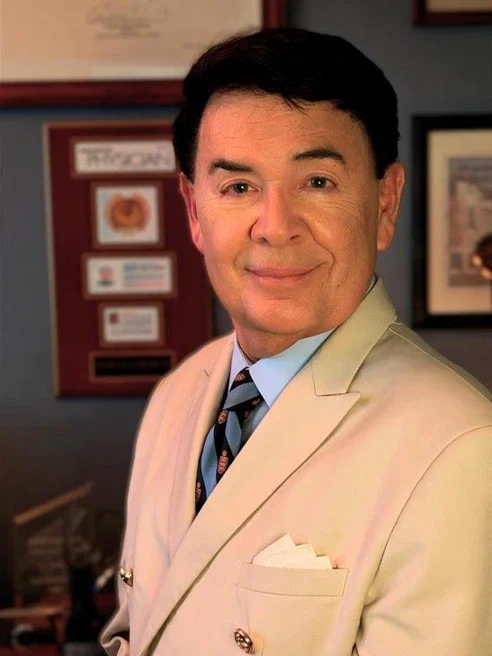
Jesse Bethke Gomez
Executive Director of Metropolitan Center for Independent Living
Jesse Bethke Gomez: Reframing Care, Dignity, and Independent Living
Introduction
Jesse Bethke Gomez has spent his career working at the intersection of leadership, systems thinking, and human dignity. As Executive Director of the Metropolitan Center for Independent Living, Jesse leads with a rare blend of strategic depth and moral clarity. His journey spans management consulting, healthcare transformation, and disability advocacy, shaped by formative mentorship under global quality pioneer W. Edwards Deming and world renown productivity thought leader Tor Dahl. Today, his work centers on one of the most urgent yet overlooked challenges of modern society: the direct care crisis facing people with disabilities and older adults. Through policy insight, education reform, and a person-centered vision, Jesse is redefining what care, leadership, and societal responsibility truly mean.
Let’s start with your journey. How did your path lead you to your current leadership role?
I began my career as a senior business consultant, while I had the extraordinary chance to train directly with Dr. Edwards Deming after completing my master’s degree in strategic leadership. His teaching around systems thinking helped me see how different sectors like healthcare, policy, and society are deeply connected. Later, I met Tor Dahl, who expanded my understanding of how quality and productivity must exist together in any healthy organization or society.
When I stepped into leadership at MCIL, I spent time listening to people with disabilities who rely on direct care services. Repeatedly, I heard about a growing shortage of workers and unmet daily needs. What started as a professional challenge quickly became a personal commitment. I promised community leaders I would help address what was clearly becoming a crisis, and that promise continues to guide my work today.
Along the way, what values have kept you moving forward?
What motivates me is a deep respect for human dignity. Dr. Deming spoke often about intrinsic motivation, that inner guidance that exists in all people. I believe leadership must honor that. Over time, thanks to Tor Dahl, I have also come to value fairness, safety, and freedom, not just as ideals, but as practical foundations for strong systems.
When people feel the freedom to be, are safe, and treated fairly, independent living becomes an even greater reality. When policies or systems ignore those basics, suffering grows. My work is guided by the belief that leadership is about accountability stewardship transparency and about conscientiously seeking to advance the best for individuals and for the greater good and common good for all.
In working to address system barriers that impede independent living for the disability communities, there is an adage that also is among by beliefs and that is the expression” “nothing about us without us.” Which for me my work is guided by the direct input from people with disabilities in seeking to perpetually understand the hopes, dreams and concerns that individuals have in seeking to live their lives as they so seek.
What was a defining moment that shaped how you see your work?
One defining moment came when I uncovered a major indicator that is as much helps us to understand the root cause behind the direct care workforce shortage. As I studied the system, I discovered that asset limits for people receiving certain federal and state services had not changed since 1983. For over four decades, those limits stayed frozen while the cost of living rose year after year. People cannot live on assets of $2,000 for individuals and $3,000 for couples.
That realization was astonishing. Having the same asset limitations that never adjust to the increase of costs of living that year after year press upon people to live with less year after year was the realization for me that beyond a direct care crisis is a humanity crisis and an increasing constitutional threshold of human suffering. This is an indicator of a deep governance drift by both the executive and legislative branches at both the federal level and the state levels that creates an increasing barrier to freedom and independent living.
From that moment on, I understood addressing direct care crisis also means addressing the larger context and questions about justice, responsibility, and most importantly a society’s internalized belief in the natural laws for all humanity that form the basis of a constitution and form of government in protecting that all are created equal, that all are endowed with certain inalienable rights and that it is self- evident that all individuals are equally endowed with human dignity.
How do you encourage innovation and collaboration within your organization?
Innovation begins with listening. At MCIL, we start by learning directly from people with disabilities about their needs, daily experiences, and concerns. Our approach is person-centric, meaning that the individual is the focal point of attention in working with individuals in addressing the concerns, barriers and also aspirations in advancing independent living. We also work at the systems-level in address in seeking to understand the nature of barriers and opportunities for creating greater support for advancing a more accessible and integrated place for all to thrive.
We work to create emotional breathing space as a key ingredient of our work culture, so that all feel free and safe to speak openly and think creatively. Collaboration grows when individuals are safe, trusted and treated fairly. That culture allows innovative ideas to surface and meaningful solutions to take shape.
From your perspective, what are key areas for highly effective leaders?
Highly effective leaders practice continual self-awareness. Leadership is not something you are born with or given a title. Leadership is a grave accountability that requires reflection and mindfulness every day.
Effective leaders take time to reflect, to understand their strengths, weaknesses, and areas that awareness is difficult to identify. They remain curious and willing to learn across disciplines. Conscientiousness, empathy, and commitment to growth are far more important than charisma.
How have mentorship and learning shaped your leadership style?
Mentorship has been foundational for me. Learning directly from thinkers like Dr. Deming and Tor Dahl shaped how I see systems, people, and responsibility. Their guidance taught me that wisdom leadership comes from humility and lifelong learning.
Within my team, I encourage mentorship by creating space for reflection, dialogue, and shared learning. Growth is a result of support and trust.
How do you keep your organization aligned as needs continue to evolve?
We stay aligned by focusing on people, not silos. Through research with people with disabilities, MCIL developed a framework called the Seven Life Sustaining Dimensions. These include food, housing, healthcare, human services, education, employment, and transportation/community connection.
This approach recognizes that healthcare alone is not enough. Stability comes from addressing the needs of a person to sustain their life. Keeping that broader view helps us remain responsive and grounded as needs change.
Looking back, what lesson most shaped your leadership philosophy?
The most powerful lesson I have learned is that systems reflect values. When systems fail people, it often means society has lost focus on its core principles. Much of my work focuses on human dignity as a system requirement.
Leadership, to me, is about restoring that focus. It is about reconnecting policy, practice, purpose and systems to serve humanity, not the other way around.
What advice would you give to emerging leaders who want to make a real difference?
Begin with self-awareness and compassion. Learn continuously, across fields and perspectives. Do not rush to solutions without understanding root causes.
Most importantly, each has a life to live and when leaders center dignity, fairness, and empathy, meaningful change becomes possible.
Finally, what excites you most about the future?
I am deeply excited about our work developing a college credit-based curriculum for Certified Direct Support Professionals. With support from the Bush Foundation, we are building a scalable solution that strengthens the direct care workforce while advancing a person-centered model of care that is transformative for the homecare sector of our healthcare system and for society overall.
This work has the potential to transform healthcare, elevate independent living, and strengthen communities. At its core, it is about advancing the ability of people to care for one another, which I believe is the highest value for all societies.
Closing Reflection
Jesse Bethke Gomez leads with rare clarity and purpose in a space often overlooked but deeply essential. Through his work at the Metropolitan Center for Independent Living, he seeks to illuminate people to care about society and to address issues of human suffering, human dignity and to remove policy and system barriers while offering practical, hopeful paths forward that are embedded in the constitutional framework of society. By reframing care as a shared responsibility rooted in dignity, freedom, and fairness, he is not only disrupting systems but helping restore their original intent in a civil society, guided by a constitution that recognizes the natural laws as the basis for society, inalienable rights and human dignity. His leadership stands as a reminder that lasting impact begins when people choose to truly care for one another.