
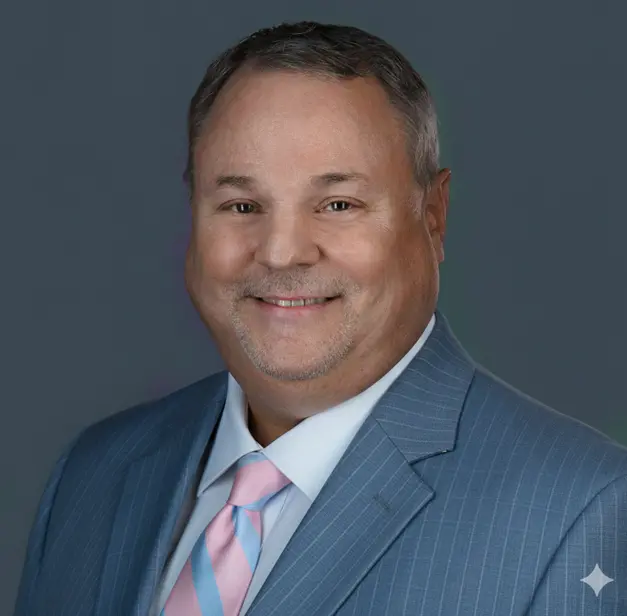
Chris Hutchins
Founder & CEO at Hutchins Data Strategy Consulting
Leading Healthcare Innovation Through Data and Trust
Chris Hutchins, Founder and CEO of Hutchins Data Strategy Consulting, has built his career at the intersection of data, healthcare, and humanity. From his early days working in hospital operations to becoming a Chief Data and Analytics Officer, his journey has always been guided by one principle: technology and information should serve people, not replace them. Today, he helps health systems transform how they use data to improve care, reduce complexity, and create a culture of trust and purpose.
Q1. Your journey into leadership is inspiring. How did it all begin?
My story started in a hospital basement where my mother worked in radiology. As a teenager, I took a part-time job in healthcare operations. I was not treating patients, but I was supporting the people who did. That changed how I saw healthcare. I began in the back office, working on billing, logistics, and workflows before moving into data and analytics. I did not plan to become a leader. I simply wanted to solve real problems and make things clearer for people who care for patients. Over time, I built analytics programs, developed self-service systems, and eventually became Chief Data and Analytics Officer. My path has always been driven by the question: how can information help us deliver better, more human care?
Q2. What motivates you to keep going, and what values shape your leadership?
My motivation comes from the people behind the numbers: patients, caregivers, nurses, and families. In healthcare, every data point represents a human moment. That keeps me grounded. I believe leadership is service. I focus on listening first, creating clarity, and building trust. Innovation to me is not about flashy technology. It is about reducing distractions so people can focus on meaningful work. If my team creates a system that saves a nurse ten minutes so they can spend more time with a patient, that is innovation.
Q3. Can you describe a defining challenge in your career and what it taught you?
One major turning point was during a financial modeling project at an academic medical center. We discovered—but only mid-way—that our revenue assumptions were wrong due to a misunderstanding of the facility lease structure. The projections were far off. I had to take responsibility, present the error to leadership, and rebuild trust with the affected group. It was humbling. That experience taught me that the best models are useless without true context and collaboration. Since then, I have never built solutions in isolation. I involve stakeholders early, ask more questions, and focus on partnership rather than perfection.
Q4. How do you foster innovation and collaboration within your teams?
Innovation happens when people closest to the work feel safe asking if there is a better way. I build trust by placing data experts directly within clinical and operational teams. They are there to understand, not to judge. When people know their voices matter and their ideas are heard, collaboration becomes natural. We also use shared platforms and centers of excellence so teams can learn from each other’s successes. And we celebrate the ideas that come from the front lines, not the boardroom. Real innovation comes from those solving problems every day.
Q5. In your view, what qualities set great leaders apart?
Great leaders simplify complexity and bring clarity to others. They ask questions instead of controlling every answer. They stay curious, not defensive. Humility is also essential—not the kind you talk about, but the kind where you share credit, admit mistakes, and listen more than you speak. Consistency matters, too. Teams need to know who is walking into the room, whether it is a crisis or a strategy meeting. Consistent values build trust, and trust is the strongest performance driver I know.
Q6. How have mentorship and learning shaped your leadership style?
Mentorship has shaped my life in powerful ways. Some leaders saw potential in me before I saw it in myself. They gave me access to rooms I had not earned my way into yet, and that changed everything. I try to lead the same way. I believe people do not need to be fully ready before being given an opportunity; they need support to grow into it. On my teams, mentorship is not a checkbox—it is part of the culture. I also practice reverse mentorship. I learn from new analysts and fresh perspectives just as much as from executives. Good ideas are not tied to job titles.
Q7. Healthcare is constantly evolving. How do you keep your organization aligned and adaptable?
Agility in healthcare does not mean moving faster. It means moving with purpose. Our purpose is to improve community health, and that guides every decision. We design systems that empower people at the edges of the organization—nurses, clinical leaders, community partners—with data they can rely on. We revisit priorities often and listen to what is happening on the ground, not just what is written in a strategy document. We also teach teams how to say no. If everything is urgent, nothing is. True agility comes from trust, clarity, and shared purpose.
Q8. What experience has most shaped your view of leadership?
The early months of COVID-19 changed me. The pressure was unimaginable—bed capacity, staffing shortages, equipment logistics, and constant data changes. During that time, leadership was not about control. It was about compassion, communication, and coordination. We relied on real-time analytics to guide decisions, but more importantly, we relied on trust. I learned that people will do extraordinary things when they feel supported and safe. I shifted from asking, “What do we deliver?” to “Who needs support?” That change still guides my leadership today.
Q9. What advice would you give to emerging leaders who want to make a real impact?
Focus on being useful, not influential. Spend time in the operations, learn how systems work, and listen to the people closest to the problems. Ask good questions. Leadership is not about having the last word, but about making space for voices that are often overlooked. And most importantly, build trust before you build strategy. Trust makes everything else possible. Stay committed to the mission, especially when it is hard. Real change takes time and conviction.
Conclusion
Chris Hutchins continues to stand out as a leader who blends strategy with empathy. His work proves that data is not just about numbers but about people and better decisions. He remains committed to building healthcare systems that are clear, compassionate, and grounded in trust. His story is a reminder that innovation is not only about technology—it is about service, listening, and leading with purpose.