
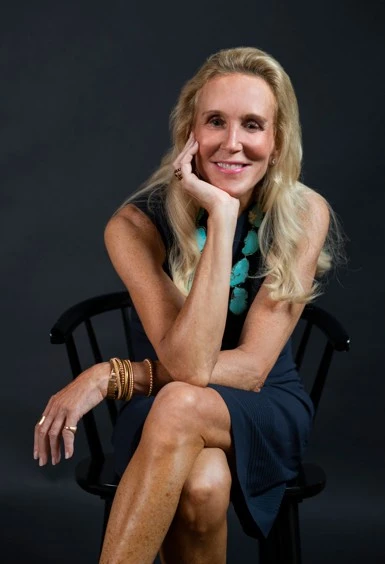
Linda Coughlin
Founder President Board Director Of Great Circle Associates
Linda Coughlin: “Change at Core™: Where Leadership Gets Real”
Some leaders manage change, and then there are those who fundamentally redefine how change happens. Linda (Lin) Coughlin belongs firmly in the latter category. Over a career spanning more than three decades, she has moved from driving high-stakes transformation within major corporations to shaping the mindset of leaders who must now navigate an increasingly unpredictable world.
As Founder and President of Great Circle Associates, she is not interested in incremental improvement. Her work is centered on what she calls deep, decisive shifts away from entrenched thinking, culture, and behavior in support of game changing Objectives – Change at Core™. It is a bold stance in a business world that often prefers the status quo over innovation. What sets her apart is not just what she teaches, but how directly she challenges leaders to confront reality, reimagine what is possible, and take responsibility for making it happen.
Q: Let’s begin with your journey. What shaped your path into this kind of work?
I did not start out thinking I would become an executive coach or advisor. I spent more than 25 years in corporate America, and the last 15 were deeply focused on transformation. I was leading initiatives that required organizations to rethink how they operated, often in high-stakes environments.
One of the most defining moments was helping take three divisions of a $20 billion company public while supporting the sale of a fourth. That experience made one thing very clear. Transformation is never just about strategy. It is about people, alignment, and the willingness to challenge deeply held assumptions.
When I stepped away from that successful endeavor, I knew I wanted to spend the rest of my career helping leaders do this work better. That is why I founded Great Circle Associates. I wanted to focus on enabling leaders to design and execute positive disruption from the status quo, not incremental change.
Q: You often talk about challenging the status quo. Where does that mindset come from?
It comes from experience. I have seen what happens when organizations cling to familiar ways of thinking, even when those ways are no longer serving them. Over time, I became very intentional about the values I would practice as a leader.
For me, that includes embracing differences, leading with generosity, and being transparent about how decisions are made. It also means having the courage to confront hard truths and the humility to recognize when I might be wrong.
Most importantly, I developed what I would call a passion for eliminating the status quo. Not for the sake of change itself, but for the long-term health of the organization and everyone connected to it.
Q: Can you share a moment that truly tested your leadership?
One experience stands out clearly. I was leading the integration of an acquired company where many of the leaders believed they should have been the acquirer. There was resistance, and in some ways, their claims were legitimate. Their culture had certain attributes that ours did not.
Instead of dismissing that, I leaned into it. I focused first on building trust with the people who were most skeptical. That meant listening, acknowledging what was true, and creating space for their perspectives to shape the future.
We brought leaders from both organizations together to define a shared mission and direction. It was not easy, and it took time. But within six months, we had consolidated operations and introduced a new pricing strategy that turned a subsidiary business around.
That experience reinforced something I still believe strongly. Real transformation starts with trust and a shared commitment to a win-win vision for change, not control.
Q: Many organizations struggle with innovation despite investing heavily in it. What are they missing?
They are treating innovation like a program instead of a culture. You cannot install innovation through a workshop or a new process. It grows out of how people feel and how they are led every day.
The first step is creating psychological safety. People need to know they can speak openly without fear of negative repercussions. Without that, leaders will hold back from offering innovative game-changing ideas.
Then you have to examine the structure. If your incentives reward individual success over shared outcomes, collaboration will suffer. I work with leaders to create environments where different perspectives come together openly and imaginatively.
At the end of the day, culture is shaped by leadership behavior. Every decision either reinforces the environment an organization strives to create or weakens it.
Q: In your view, what truly separates great leaders from good ones?
Good leaders deliver results. Great leaders transform people and organizations in ways that endure.
They create a sense of purpose that people can connect with on a personal level. They understand what is happening beneath the surface in their organizations, not just what is visible.
They are also deeply committed to developing others. Their success is measured not only by outcomes, but by the leaders they develop.
And perhaps most importantly, they choose courage over comfort. They are willing to challenge assumptions, make bold decisions, and take responsibility for the consequences.
Q: You place strong emphasis on mentorship and learning. Why is that so critical?
Because leadership is not static. The moment you think you have arrived is the moment you stop growing.
I encourage leaders to see themselves as learners first. That means being intentional about reflection, seeking feedback, and staying curious. Learning cannot be passive. It has to be practiced.
Mentorship is equally important. It is not something you do when you have time. It is a core responsibility. When leaders intentionally develop others, they expand the capacity of the entire organization.
What I try to instill is a shift in identity. Leaders are not just decision-makers. They are teachers.
Q: How do you help leaders stay aligned and agile in uncertain, complex environments?
The traditional approach to long-term planning does not hold up well in today’s environment. An intensely shared purpose drives momentum and the courage to depart from the status quo.
When organizations are clear on why they exist, people can make aligned decisions even when conditions change. I also encourage leaders to push decision-making closer to the front lines. Speed matters, and it cannot come from centralized control.
Another key factor is helping leaders become comfortable with uncertainty. Not everything can be resolved immediately. Sometimes the role of a leader is to hold that uncertainty and guide others through it with clarity and calm.
Agility is not just about reacting. It is about building systems that allow you to move with intention, even when the path is not fully clear.
Q: What is one lesson that has fundamentally shaped how you lead today?
I learned that transformation requires holding two practices at the same time. You have to drive reinvention while protecting what defines the organization at its best.
People need to know what will not change. That creates stability. At the same time, they need to see how change connects to a larger purpose. That creates momentum.
When leaders get that balance right, change stops feeling like a threat and starts feeling like an opportunity.
Q: What advice would you offer to emerging leaders who want to make a real impact?
Start with yourself. Understand your strengths, your blind spots, and how you respond under pressure. That level of self-awareness is non-negotiable.
Build relationships early and genuinely. Trust is built over time, and it becomes your greatest asset when you need to lead through change.
Also, do not avoid discomfort. The experiences that stretch you are the ones that shape you.
And stay connected to your purpose. It will keep you grounded when things get difficult, which they inevitably will.
Q: Looking ahead, what gives you the most energy about the future?
What excites me is the possibility of changing how leadership is experienced. Too many leaders operate under self-doubt or within cultures that limit what is possible.
I want to help eliminate those barriers. That includes addressing imposter syndrome, building cultures rooted in trust and accountability, and creating space for more women to step into leadership at the highest levels to the goal of creating the full partnership of men and women leaders.
I also believe strongly in the power of intergenerational collaboration. There is much to be gained when different perspectives come together with mutual respect.
Ultimately, I see a future where leadership is less about hierarchy and more about shared impact.
Linda Coughlin’s work stands out because it does not settle for incremental change. She challenges leaders to look inward and outward, confront what is no longer working, and take bold, thoughtful action. Through Great Circle Associates, she continues to shape leaders who are not only capable of navigating change but of defining it. In a world where uncertainty is constant, her approach offers something rare: clarity, conviction, and a deeply human understanding of what it takes to lead.