
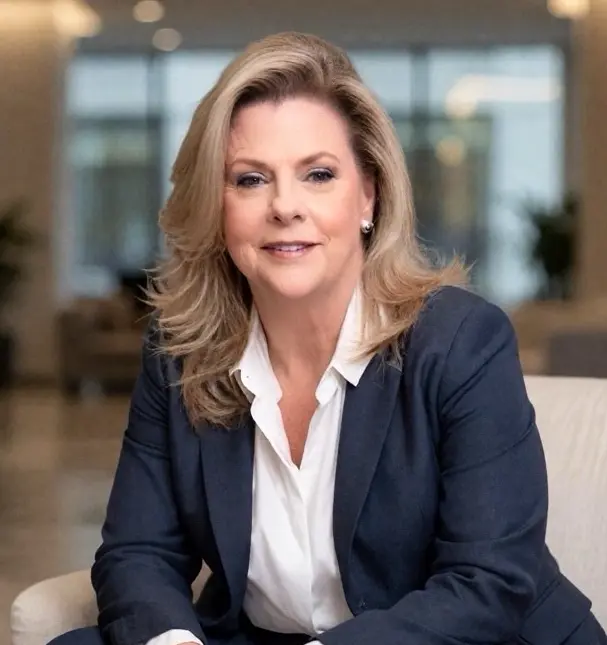
Dawn Stastny
Chief Human Resources Officer and Leadership & Compliance Executive
Dawn Stastny: Leading People, Transforming Organizations, Building What Lasts
Leadership is often described through titles, achievements, and business results. For Dawn Stastny, Chief Human Resources Officer and Leadership & Compliance Executive, its deeper meaning lies in stewardship. Her career has developed across human resources, compliance, safety, organizational transformation, acquisitions, and enterprise leadership, giving her a broad understanding of how people, culture, governance, risk, and performance connect.
Having been involved in 14 acquisitions and led across a multi-site organization spanning the U.S. and Canada, Stastny has built her leadership philosophy around one central belief: organizations become stronger when their people are given the trust, clarity, opportunity, and support to grow. Her approach combines business understanding with a strong human focus, creating a leadership model that is both practical and deeply personal.
Q: Let’s start with your journey. What led you to where you are today?
Dawn Stastny: My journey into leadership was not a straight line, and I believe that has been one of its greatest advantages. I began close to the work, learning the realities of people, operations, employment law, and what it takes to make an organization function. Over time, my responsibilities expanded across HR, compliance, safety, transformation, and enterprise leadership.
One of the biggest lessons was that HR cannot operate on the sidelines of the business. To influence outcomes, leaders have to understand how the company makes money, how operations work, where risk exists, what customers expect, and what prevents people from doing their best work.
That changed how I viewed my career. I stopped thinking of HR as simply a function and began seeing it as part of the architecture of the enterprise.
Today, I define leadership as stewardship. Leaders are entrusted with an organization, its people, and its future for a period of time. The responsibility is to leave behind stronger leaders, stronger systems, and greater capability than they inherited.
Q: What has motivated you throughout your career, and what values guide your leadership today?
Dawn Stastny: Early in my career, I was motivated by proving what I could accomplish, taking on difficult assignments, solving problems, and earning the opportunity to do more. Over time, that changed. My motivation became much more about what I could make possible for other people.
I believe leadership is both a privilege and an obligation. When someone has influence, they can change the direction of another person’s career and sometimes their life. Sponsorship matters to me. Fighting for people when they are not in the room matters. Creating opportunities for people who may not yet see their own potential matters.
The values that guide me are integrity, honesty, courage, respect, accountability, and humanity. These values are most important when doing the right thing is difficult or unpopular.
Trust is equally important. People need to know that a leader cares, that words and actions match, and that the truth will be told even when it is uncomfortable.
Q: What has been one of the most defining challenges of your career?
Dawn Stastny: One of the most defining experiences came during a period of significant acquisition and integration. Two acquisitions were completed within roughly 60 days, bringing together organizations with different histories, leadership styles, systems, policies, benefits, and cultures.
The real challenge was deciding what needed to become enterprise-wide and what should remain local. Standardizing everything could erase what made each business successful, while leaving everything unchanged would mean the organizations were never truly integrated.
The question became: how do you create one enterprise without erasing the strengths of the organizations that built it?
We established common standards around governance, people practices, benefits, compliance, leadership accountability, performance measures, and reporting, while allowing flexibility around areas that needed to remain close to local customers and communities.
The experience taught me that transformation cannot be managed through spreadsheets and project plans alone. Leaders have to communicate the why, listen to people’s concerns, protect valuable knowledge, and help people see themselves in the new organization.
Q: How do you create an environment where innovation and collaboration can grow?
Dawn Stastny: Innovation starts with giving people both permission and responsibility to think differently. People cannot be expected to bring their best ideas if they are punished for challenging the way things have always been done.
Trust is central to that. People close to the work often see opportunities and problems before they reach an executive dashboard. Leadership is not about having every answer. It is about asking better questions, removing barriers, connecting the right people, and creating enough safety for someone to say, “I think there is a better way.”
I also believe collaboration must go beyond meetings. Major business challenges require different functions to share ownership of the outcome.
AI adds another important dimension. The question should not only be what technology can automate, but what becomes possible because of it. If technology creates more time, that time can be invested in customers, development, innovation, problem-solving, and work that requires human judgment.
Q: What qualities separate exceptional leaders from the rest?
Dawn Stastny: Exceptional leaders create clarity, build trust, exercise sound judgment, and make the people around them better.
Self-awareness is critical because a leader’s words, behavior, moods, decisions, and even what they tolerate can shape culture. Courage also matters. Leaders must be willing to have difficult conversations, challenge consensus, and make decisions others may avoid.
Curiosity and humility are equally important. I have never believed that my responsibility is to be the smartest person in the room. My responsibility is to make sure the right people are in the room, that their voices are heard, and that the best decision is made.
Great leaders also know how to turn strategy into execution. Finally, they build people. They create opportunities, sponsor talent, and prepare others to lead without them.
Q: How have mentorship and learning influenced your leadership?
Dawn Stastny: Mentorship has been foundational to my growth. Some of my most influential mentors were people who invested in me, challenged me, opened doors, or gave me the right advice at the right moment.
One lesson that stayed with me was that influence is earned. Leaders need enough trust for people to allow them into the conversation and enough credibility for people to keep listening.
I also learned to stop focusing on why something could not be done and instead ask, “How do we get to yes responsibly?”
There is an important difference between mentorship and sponsorship. Mentors advise you. Sponsors advocate for you when you are not in the room. People need both.
I try to develop people through stretch assignments, honest feedback, exposure to different parts of the business, succession planning, and opportunities to learn through experience. My view of legacy is simple: it is not what you leave behind. It is who you leave behind to carry the work forward.
Q: How do you help organizations remain aligned while responding to change?
Dawn Stastny: Agility begins with accepting that what worked yesterday may not work tomorrow. Markets change, technology moves quickly, customer expectations evolve, and workforce expectations shift.
Alignment starts with clarity around purpose and priorities. People need to understand where the business is going, what matters most, how success will be measured, and where decisions should be made.
Leaders also need to stay close to the business. Data tells us what is happening, but leaders must understand why. That means listening to customers, being present with employees, and making sure information can move quickly from the front line to decision-makers.
AI makes capability planning even more important. Instead of asking only how much cost technology can remove, organizations should ask what capability it can create. Efficiency matters, but so do reskilling, institutional knowledge, customer value, and future leadership.
Q: Was there a particular lesson that changed how you lead?
Dawn Stastny: An early experience involving feedback from Jack Welch had a lasting impact on me. The lesson was that people need to like and trust you enough to let you into the conversation, but they also need to respect your capability enough to keep listening.
That changed how I understood influence. Expertise alone is not enough. Relationships and credibility allow competence to have an impact.
Another important lesson was learning to ask, “How do we get to yes?” That does not mean compromising ethics or compliance. It means understanding the business objective and finding a responsible way forward.
Over the years, I also learned that people remember how leadership made them feel. They remember whether leaders were present during difficult moments, whether they were truthful, and whether their values remained intact when those values were tested.
Q: What advice would you offer emerging leaders?
Dawn Stastny: Do not measure progress only through titles, compensation, or position. Learn the business, not just the function. Understand how the organization creates value, what customers need, where risk exists, and what keeps people closest to the work awake at night.
Build relationships, not just accomplishments. Find mentors who challenge you and sponsors who advocate for you. Then, when you have influence, do the same for someone else.
Do difficult things with integrity. Stay curious and never become so invested in being the expert that you stop being the student.
Most importantly, remember that leadership is stewardship. Build stronger systems, make better decisions, develop greater capability, and help people become ready to carry the work forward.
Q: Looking ahead, what excites you most about the future?
Dawn Stastny: I am currently in a deliberate transition after nearly a decade with my most recent organization. I am being intentional about what comes next. I am looking for the right opportunity to apply everything I have learned across transformation, acquisitions, integration, people, compliance, governance, and enterprise leadership.
At the industry level, I believe AI is creating one of the most important periods for leadership and the workforce in decades. The technology is only part of the story. Organizations need to rethink jobs, skills, structures, leadership pipelines, and how human capability can work alongside technology.
The future CHRO needs to understand business, technology, workforce economics, organizational design, risk, culture, and change, and connect those areas to execution.
What excites me most is not knowing exactly what comes next. It is knowing how much I still have to contribute when the right opportunity and the right organization come together.
A Leadership Legacy Built Around People
Dawn Stastny’s leadership journey reflects a steady shift from functional expertise toward a broader understanding of enterprise leadership. Her experience across transformation, acquisitions, compliance, people strategy, and organizational change has shaped a philosophy grounded in trust, courage, accountability, and humanity.
At the heart of her approach is a simple measure of success: whether people and organizations become stronger because of her leadership. For Stastny, the most meaningful legacy is not a title or a personal achievement. It is the leaders developed, the opportunities created, and the capability built to continue the work.
As she enters her next chapter, that philosophy remains clear. The focus is not simply on what comes next, but on finding an opportunity where experience can create lasting value and where people can be prepared to lead what comes after.