
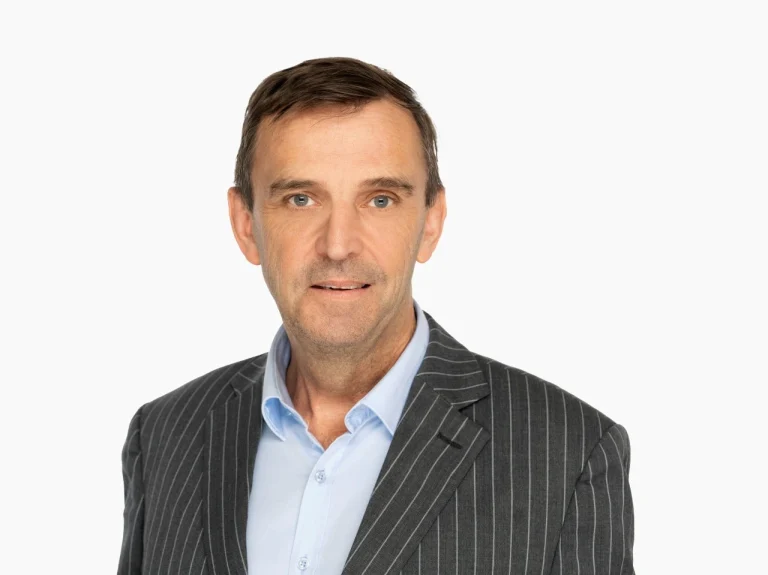
Greg Fuller
CEO / Founder of Sure Growth Management Services
Greg Fuller: Redefining Construction Through Sustainability, Data and Innovation
The construction industry is entering a period of major change, shaped by technology, sustainability and the growing need for better ways to manage complex projects. Greg Fuller, CEO and Founder of Sure Growth Management Services, has spent decades working at the intersection of construction, cost management, technology and sustainable development. His journey began with a natural talent for carpentry and a desire to understand how buildings could be designed and delivered more effectively.
His early studies in building at the University of NSW led him towards technical thinking and sparked his interest in environmentally friendly construction. From designing solar passive houses in regional New South Wales during the 1990s to developing advanced systems for construction cost and project management, Fuller has consistently looked for ways to achieve better results with greater accuracy and fewer unnecessary inputs.
Today, his patented and copyrighted systems combine detailed cost management with emissions reporting, supported by automation and AI. His goal is to help move construction management towards a more sustainable future while supporting investors and the wider industry in making better-informed decisions.
Q: What first inspired you to enter construction, and how did that journey lead to your current role?
Greg Fuller: My inspiration came from being very good at carpentry and wanting to pursue an apprenticeship. My parents encouraged me to attend university instead, which led me to complete a Bachelor of Building at the University of NSW. That experience moved me towards more technical areas and began shaping my interest in environmentally friendly, or sustainable, construction.
I have always looked for easier and more accurate ways of doing things while achieving the same goals. That thinking eventually led me to design true solar passive houses in regional New South Wales during the 1990s. Later, I developed a strong interest in proper cost management and began creating systems to monitor construction status.
Over time, I continued developing these systems. Today, I am integrating detailed cost management with emissions management so developments can have live, accurate cost positions alongside live reporting of their sustainability status. With AI, I believe construction management can move into a new generation of sustainable development.
Q: What kept you moving forward when you faced resistance to sustainable approaches?
Greg Fuller: A major motivation came from seeing better ways to reduce risk. However, many of my biggest challenges came from having to convince management that sustainable approaches should be considered seriously. Too often, decisions are based on the lowest cost today without considering the true cost over the life of a project or the wider benefits that sustainability can deliver.
That was one of the reasons I started my own company. I wanted to have a real impact by helping investors look at their developments from a more sustainable perspective.
I then refined my cost management systems, invested heavily in developing a full ERP system and created an app for project management. I continued refining the system to manage the information coming into and out of the ERP.
Q: What has been the biggest challenge in bringing your ideas to life?
Greg Fuller: One of the biggest challenges has been people’s difficulty in looking beyond traditional ways of doing things. When something is very different, people can see it as impossible or impractical.
For example, when I explain the idea of managing construction costs down to a per-unit level, the first response is often that it will create too much paperwork. Others simply do not understand why such detail is necessary because they believe the existing system works well enough.
My approach has been to build the complete system and then demonstrate how it works through meaningful reports. The biggest technical hurdle was managing huge volumes of information while keeping the process simple. We moved from handling hundreds of pieces of data to potentially hundreds of thousands of data points, which meant automation was essential.
Developing the upload documentation and making this process work took nearly two years. Getting it functioning and proving that it could work was one of my biggest achievements.
Q: How do you encourage innovation within your team?
Greg Fuller: Innovation starts with being able to look outside the usual way of doing things. That can be difficult to teach, so I believe in explaining why I do something and what I am trying to achieve. I then involve the team in finding ways to reach that goal.
It becomes a step-by-step process where people have the opportunity to grow and see that their ideas and contributions genuinely matter.
Empathy is also important. Leaders need to understand different perspectives and accept that their own way is not the only way. Sometimes that means putting aside what is already known and being open to an approach that may be completely different from what has been done before.
Q: What qualities do you believe separate strong leaders from the rest?
Greg Fuller: I would say empathy, moral and ethical integrity, listening and always looking for a better way of doing things.
The ability to see different perspectives is equally important. Leadership is not simply about having the answers. It is about understanding people, listening to them and being willing to consider another point of view before making a decision.
Q: How has mentoring shaped your leadership style?
Greg Fuller: Seeing the impact you can have on others is incredibly inspiring. I constantly analyse the reactions to what I say and do so I can understand whether my approach is achieving the response I intended.
This has allowed me to adjust and develop my teaching methods over time. I want to be a role model that others can look to within the industry.
When leading people, I believe they need to become part of the process. Their input should be meaningful and their contribution should have value. The first step is listening and observing, followed by understanding, and then speaking and teaching.
Q: How do you keep your organisation aligned with changing customer and market needs?
Greg Fuller: I continually analyse situations and the responses I receive, then adjust the next approach based on what those changes require. Understanding customers also means understanding their clients, which requires consistent market research.
It is important not to rely only on published information. You need to understand what is actually happening in the market and how people are responding to it.
Technology is another major part of this. My business is built around systems, data and automation, so staying current with technological developments is essential. AI is already changing expectations, and businesses need to keep pace with these advances.
For me, the process is research, understanding, surveying and then guiding clients and their clients based on what they truly need. The aim is not simply to meet those needs, but to provide more than expected.
Q: Was there someone who strongly influenced the leader you became?
Greg Fuller: My first boss, Greg Sullivan, had a major influence on my leadership style. I also remember my mentor Mike Obrien from the same company. They taught me to be lighthearted, empathetic, open to different perspectives and focused on the bigger picture instead of getting caught up in the noise.
Over the years, I have developed those lessons further. I have created systems that are more human-centred rather than simply process-centred. Although the systems are based on processes, my focus remains on the person and the impact on them, with the final achievement as the goal.
People need to understand before they believe, and they need to believe before they follow.
Q: What advice would you give emerging leaders who want to make a meaningful difference?
Greg Fuller: Never believe there is only one way to do something. Look at different perspectives so decisions are based on the most informed position possible.
Never compromise on ethics or morals. Listen to others because everyone can provide valuable input. Empathy can be learned, and I believe it is the foundation of true leadership, so it should be one of the most important goals for any emerging leader.
Do not listen to the noise. Stay focused, and never give up.
Q: What excites you most about the future of construction?
Greg Fuller: The industry is standing at a major bridge where technology is becoming the main driver across business. What excites me most is seeing how technology will lead and shape construction in the future.
A Future Built on Better Thinking
Greg Fuller’s journey reflects a simple but powerful belief: better outcomes often begin by questioning the way things have always been done. From his early work in sustainable housing to the development of advanced cost and data management systems, his career has been shaped by a willingness to challenge established thinking.
His approach combines technology with a strong focus on people, sustainability and practical results. By bringing together detailed project data, automation, emissions reporting and AI, Fuller is working towards a model of construction management that is both more informed and more sustainable.
At the heart of his philosophy is the belief that progress requires openness, empathy and persistence. As construction moves towards a technology-led future, his work represents an effort to make that transition more practical, measurable and human-centred.