
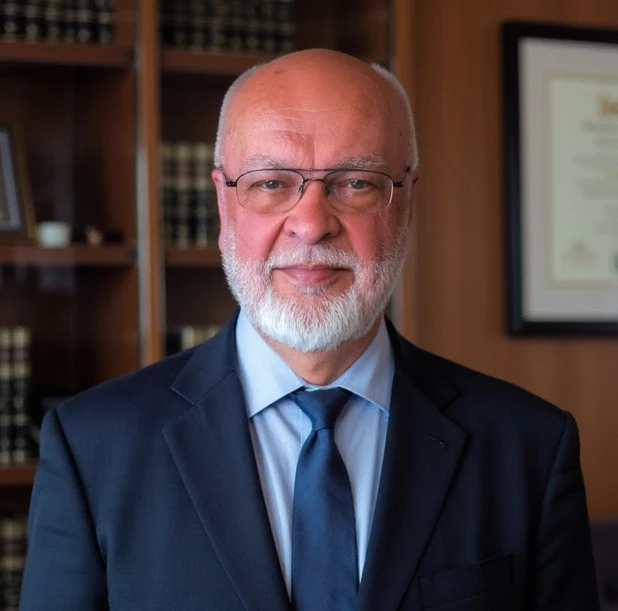
Wayne Cole
CEO and Executive Chair Of The Sterling Executive Group Inc.
Wayne Cole: Turning Leadership Into Disciplined Execution
In today’s complex business landscape, leadership is often discussed in terms of vision, influence, and inspiration. Yet for Wayne Cole, the true measure of leadership lies in execution. As CEO and Executive Chair of The Sterling Executive Group Inc., he has built his career around a simple but powerful belief: most organizations do not lack talent, they lack disciplined leadership practices. Through his work, he has helped senior leaders move beyond ideas and into consistent, measurable performance, shaping a more practical and results-driven approach to leadership.
Let’s start with your journey. How did it all begin, and what led you to where you are today?
My journey has always been driven by a curiosity about how leaders perform under pressure. Over time, I worked closely with CEOs and senior executives who were capable and committed, yet many teams struggled with alignment, clarity in decisions, and consistent execution. That pattern stood out. It became clear that the issue was not talent, but how leadership was practiced. That realization led me to Sterling, where the focus is on helping leaders turn strong ideas into disciplined execution through practical frameworks like the Leadership Field Manual.
What has kept you motivated לאורך the way, and which values guide your leadership today?
What continues to drive me is the belief that leadership can be made clearer and more useful for those carrying real responsibility. Leaders are often expected to make decisions with incomplete information while managing competing priorities. The values that guide me are clarity, integrity, discipline, and usefulness. Clarity reduces confusion across the organization. Integrity builds trust. Discipline ensures that good intentions translate into results. And usefulness keeps leadership grounded in real-world application rather than theory.
Every career has defining moments. Was there one that shaped your thinking?
A key turning point was realizing that advice alone does not lead to results. Leaders can attend sessions, join discussions, and gather insights, but without disciplined follow-through, very little changes. I began to see that recurring leadership issues often come from not applying basic principles consistently. That shifted my focus toward building systems that help leaders align, decide, execute, and review in a structured way. It changed how I approached leadership development entirely.
Innovation and collaboration are essential today. How do you foster both within your organization?
Both depend on trust, but they also require structure. Teams need to move beyond surface-level problem-solving and identify root causes. When leaders learn to diagnose issues properly, innovation becomes more natural. Collaboration improves when there is a shared language. At Sterling, we use structured frameworks so teams can discuss alignment, accountability, and execution with clarity. True collaboration is not just agreement. It is the ability to work through difficult issues and arrive at better decisions together.
From your experience, what separates top-performing leaders from the rest?
The difference lies in discipline. Strong leaders do not simply react. They diagnose before acting. They create alignment rather than assume it exists. They make decisions with clear ownership and timing. They hold people accountable in a constructive way, focusing on clarity rather than blame. Most importantly, they review outcomes honestly. They look beyond whether a problem was solved and examine what it reveals about how the team operates. Consistency in these habits is what sets them apart.
How has mentorship influenced your growth, and how do you approach it within your organization?
Mentorship has been valuable in providing perspective, especially from people who are not caught in the same environment. It helps leaders see blind spots. However, I believe mentorship should not create dependency. Its purpose is to improve judgment, not replace it. At Sterling, we encourage structured learning through peer discussion and reflection. Leaders are challenged to think clearly, test assumptions, and make informed decisions. The goal is always to strengthen independent thinking.
Markets are constantly evolving. How do you keep your organization aligned and agile?
Agility is not just about speed. It requires clarity and discipline. First, leadership teams must stay aligned on priorities, even as complexity increases. Second, decision-making must be clear and timely. Delayed decisions can slow the entire organization. Third, execution must be structured with clear ownership and follow-through. Finally, there must be a strong review process. Organizations need to learn continuously and adjust based on real outcomes. That combination creates true agility without chaos.
Looking back, what lesson has had the biggest impact on your leadership style?
One important lesson is that most recurring problems are not new. They are often the same leadership issues appearing in different forms. What looks like a project delay might actually be unclear ownership. What seems like a conflict could be weak alignment. This understanding changed how I approach challenges. Instead of reacting quickly, I focus on asking better questions to identify the real issue and address it at the root.
What advice would you give to emerging leaders who want to make a meaningful impact?
The key advice is not to confuse activity with leadership. Being busy is not the same as being effective. Leadership is about creating clarity, building trust, and ensuring that important work gets done. I would also encourage them to learn the fundamentals early. Skills like running effective meetings, making clear commitments, handling difficult conversations, and making decisions under uncertainty are essential. Over time, their value will come from the performance they enable in others, not just their individual output.
Looking ahead, what excites you most about the future?
What excites me is the shift toward more practical leadership development. There is growing recognition that leadership is not just about ideas or inspiration. It is about how teams actually operate. The future belongs to organizations that can align effectively, make clear decisions, execute consistently, and review outcomes with discipline. That is where Sterling is focused, and the opportunity to help leaders improve in that space is both meaningful and necessary.
Closing Perspective
For Wayne Cole, disruption does not come from bold statements or rapid change alone. It comes from refining the fundamentals of leadership and applying them with consistency. Through his work at The Sterling Executive Group Inc., he has challenged organizations to rethink how leadership is practiced, shifting the focus from discussion to disciplined execution. In a world where complexity continues to rise, his approach offers something rare: clarity, structure, and a path to sustainable performance.